Forming fabric edge curling is one of those problems that looks small at first and then quietly becomes expensive. A lifted edge can affect tracking, create local wear, collect deposits, and eventually lead to edge damage or sheet defects.
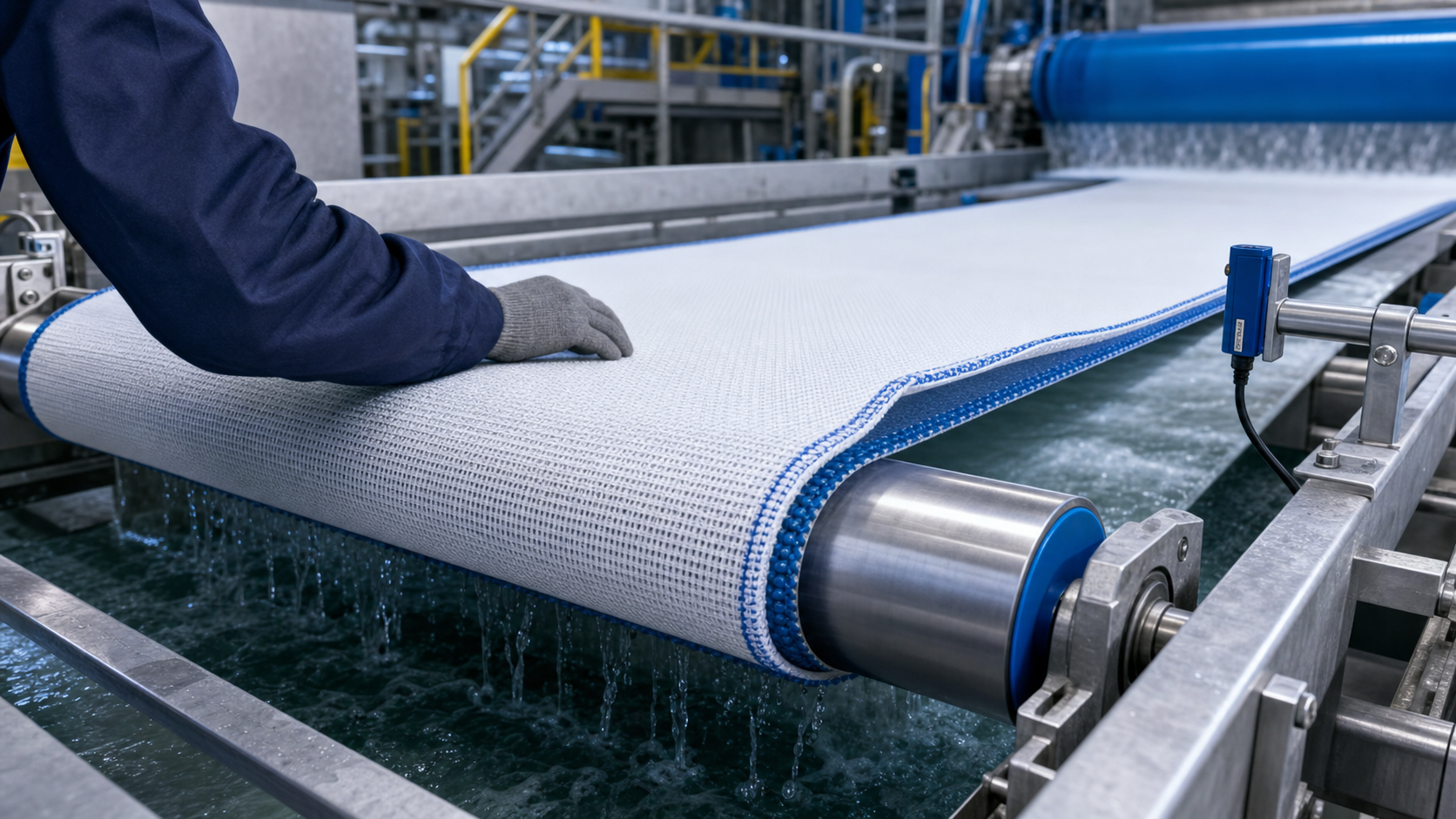
What Edge Curling Usually Means
Edge curling happens when the fabric edge no longer lies flat on the roll surface or the supporting elements. In many cases, the root cause is not one single defect but a combination of uneven tension, local contamination, roll alignment error, and edge loading.
For forming fabric applications, edge stability is especially important because the wet end combines high water load, vacuum zones, chemical additives, and frequent speed changes.
Common Causes
| Cause | What You May See | First Check |
| --- | --- | --- |
| Uneven installation tension | One side lifts or tracks hard | Tension profile and start-up record |
| Guide roll or breast roll misalignment | Fabric walks to one side | Roll parallelism and guide response |
| Edge contamination | Stiff edge, dark deposits, local wear | Edge shower and chemical buildup |
| Storage or handling deformation | Curl appears immediately after mounting | Packing, folding, and pre-install condition |
| Edge contact with stationary parts | Fraying, polishing, or heat marks | Clearance around doctors, seals, and frames |
Field Troubleshooting Steps
- Stop and inspect the edge if there is rapid growth, fraying, or vibration.
- Confirm the fabric was installed in the correct running direction.
- Measure tension on both drive and tending sides if the machine allows it.
- Check guide roll movement, sensor position, and whether the guide is over-correcting.
- Inspect edge showers, vacuum box edges, and stationary frame clearance.
- Clean deposits with a method approved for the fabric material and mill chemistry.
- Restart gradually and record whether the curl grows with speed, vacuum, or load.
Prevention During Installation
Do not bring the fabric to final tension too quickly. Let the loop settle, center it before acceleration, and avoid sharp local bending at the edge. On wide machines, coordinate the team so both sides are tensioned evenly.
For high-speed machines or demanding grades, an SSB triple-layer forming fabric can provide stronger dimensional stability, but it still needs correct installation and machine alignment.
Contact your fabric supplier when edge curling appears repeatedly in the same machine position, when curling starts immediately after installation, or when the edge shows abnormal stiffness, discoloration, or broken yarns. Clear photos, machine speed, tension data, vacuum data, and running hours will help the technical team identify the root cause faster.
Practical Takeaway
Treat edge curling as an early warning signal. The fastest solution usually comes from checking fabric condition and machine conditions together instead of replacing one component blindly.


