Press felt conditioning is not just a cleaning system. It controls how open the felt remains, how much water it can accept in the nip, and how stable the press section stays over the felt life.
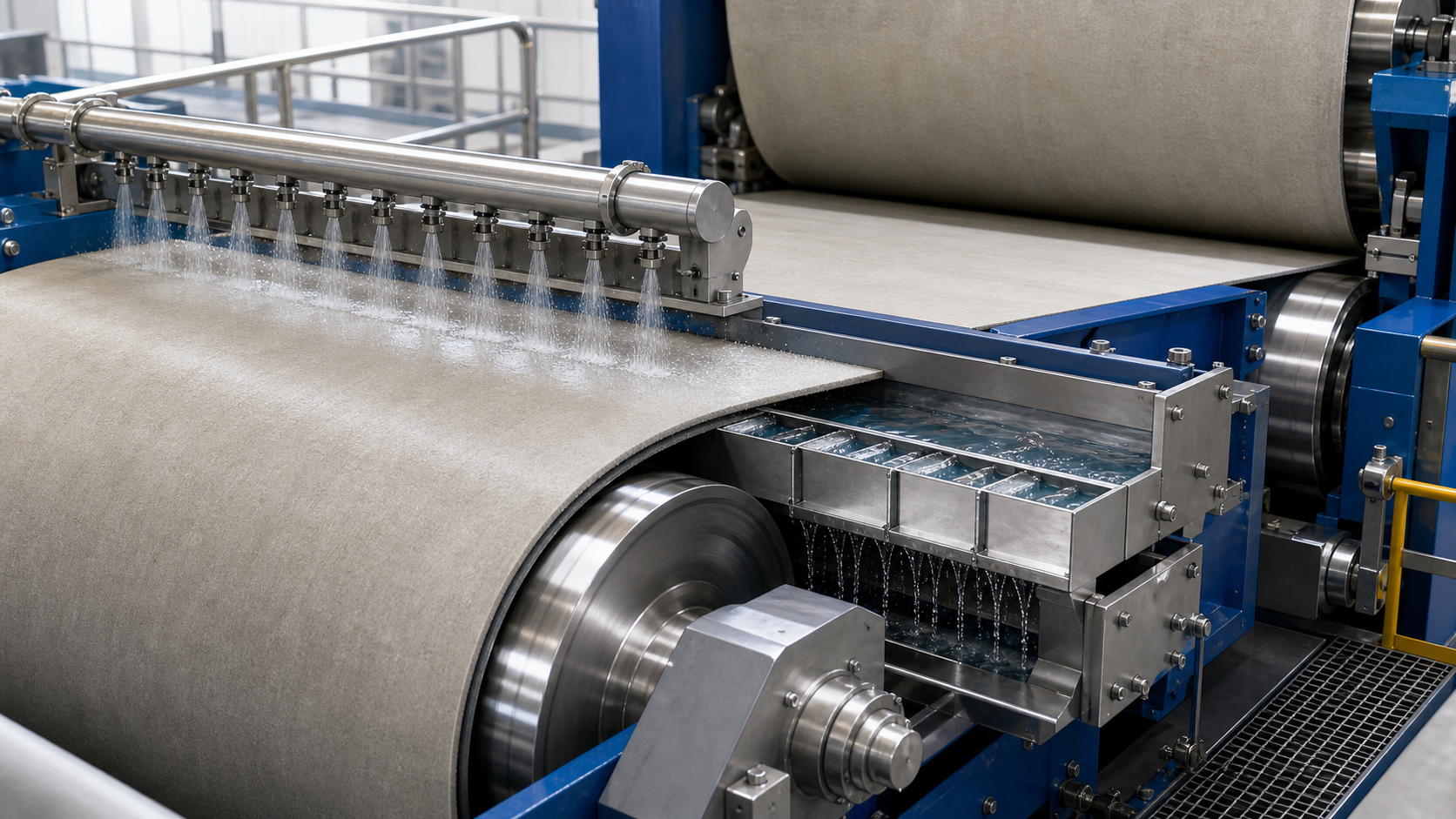
The Conditioning System Has Three Jobs
A good conditioning setup should remove contaminants, restore permeability, and dewater the felt before it returns to the press nip. If one part is weak, the entire press section can lose efficiency.
The main components are usually:
- High-pressure needle showers for cleaning the felt structure
- Lubrication or flood showers for surface wetting and chemical balance
- Uhle boxes or suction boxes for water and contaminant removal
- Savealls and drainage routes that prevent re-contamination
Symptoms of Poor Conditioning
| Symptom | Likely Area to Check |
| --- | --- |
| Falling sheet dryness | Felt plugging, low shower impact, poor vacuum |
| High drive load | Uhle box cover friction, over-vacuum, dirty felt |
| Felt crushing or glazing | Excessive nip load, poor cleaning, chemical deposits |
| Streaks after the press | Plugged shower nozzles or uneven suction |
| Short felt life | Abrasive deposits, damaged covers, unstable tension |
Shower Optimization
Check shower pressure at the header and confirm that nozzles are not partially blocked. A nozzle can still spray water while producing a poor impact pattern, so visual inspection alone is not enough. The shower angle should reach the felt surface evenly without pushing contaminants across the width.
For heavy recycled furnish or high ash grades, cleaning demand is higher. In these cases, the press felt design and conditioning setup should be reviewed together.
Vacuum and Uhle Box Checks
Vacuum should be high enough to remove water but not so high that it accelerates wear or increases energy use without benefit. Inspect uhle box covers for uneven wear, sharp edges, and slot deformation. A worn cover can damage the felt surface even when the vacuum reading looks normal.
Start-Up and Daily Monitoring
During start-up, build load gradually and watch felt water content, drive load, shower pressure, and vacuum trends. During daily operation, compare current readings with the baseline from the first stable production days.
Practical Takeaway
The best felt conditioning program is balanced. Do not treat showers, vacuum, and felt design as separate topics. They work as one system, and small corrections often prevent major press section losses.


