When a belt filter press loses performance, the belt is often the first component blamed. Sometimes that is correct, but poor cake release, low solids, and tracking problems are frequently created by feed conditioning, wash-water quality, roller condition, or uneven loading.
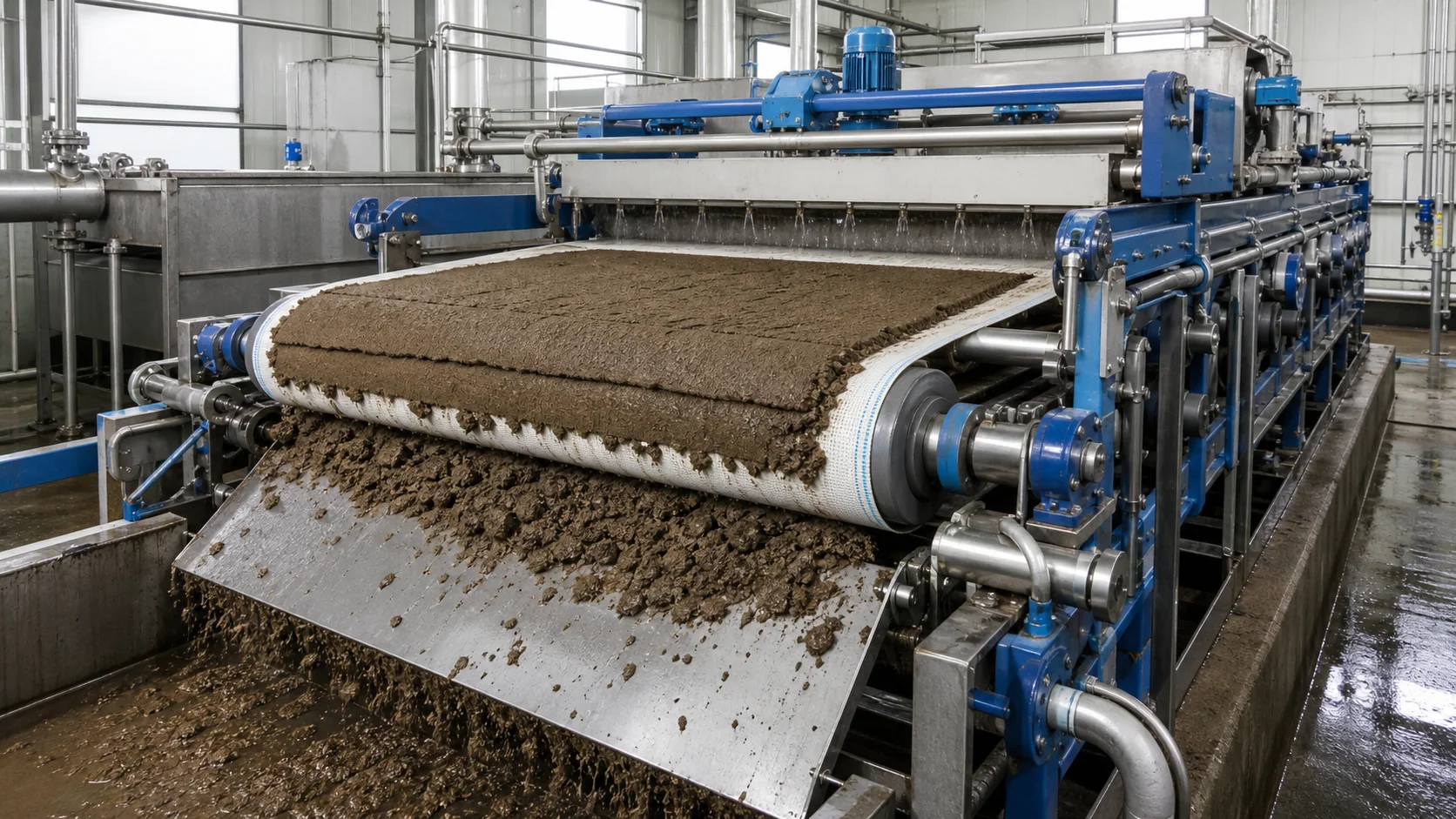
Identify the Problem by Zone
A belt filter press has three linked duties: gravity drainage, progressive compression, and cake discharge. Start where the symptom first appears.
- In the gravity zone, look at floc formation, free-water release, feed distribution, and solids loss through the belt.
- In the wedge and pressure zones, check cake stability, belt tension, roller cleanliness, and side leakage.
- At discharge, inspect cake release, scraper contact, belt surface condition, and wash effectiveness.
This zone-by-zone approach prevents a discharge symptom from hiding an upstream conditioning problem.
Poor Cake Release
Cake that wraps around the discharge roll or remains on the belt can result from weak floc, a blinded belt, incorrect scraper geometry, low tension, or an unsuitable belt surface. Observe whether sticking occurs across the full width or only in bands.
Full-width sticking often points to conditioning or surface compatibility. Strips of retained cake are more likely to follow plugged wash nozzles, local belt contamination, uneven scraper contact, or a damaged roller surface.
Before selecting a different sludge dewatering belt, record the sludge type, feed solids, polymer product and dose, throughput, belt speed, wash pressure, and current belt age.
Belt Tracking That Will Not Stay Centered
First confirm that sludge is distributed evenly. A heavier cake on one side creates a continuous steering force that the guide system may not overcome. Clean buildup from rollers and check that they rotate freely.
Inspect both belt edges. A stretched, folded, or abraded edge can make the belt respond differently in each direction. Then review tension, guide sensor position, guide roll travel, air supply, and frame alignment. Avoid using guide sensitivity to mask a mechanical alignment problem.
Low Cake Solids
Low cake solids do not automatically mean the belt is too closed. The problem may begin with poor floc formation or insufficient gravity drainage, leaving the pressure zone with too much mobile water.
| Observation | Checks to make first |
| --- | --- |
| Milky filtrate or solids loss | Polymer mixing, dose, floc strength, belt opening |
| Puddling in gravity zone | Feed rate, belt speed, blinding, distribution |
| Wet cake at both edges | Feed profile, side containment, pressure alignment |
| Dry center and wet bands | Wash nozzle pattern, roller deposits, local blinding |
| Good cake that suddenly deteriorates | Sludge change, polymer batch, wash pressure, belt damage |
Change one variable at a time and allow the process to stabilize before judging the result. Simultaneous changes to polymer dose, belt speed, tension, and pressure make the real cause difficult to identify.
Blinding and Washing
A belt may look clean while fine solids remain inside the weave. Compare water flow through a clean reference area and the working zone. Check nozzle condition, spray angle, overlap, pressure at the header, and whether dirty wash water is redepositing solids.
Use cleaning chemicals only after confirming compatibility with the polyester yarn, seam, edge treatment, and wastewater process. Stronger chemistry is not a substitute for correct nozzle impact and sufficient rinse volume.
The overview in What Is a Sludge Dewatering Belt? explains how belt construction and permeability relate to the press zones.
When the Belt Design Should Change
Consider a design change when process conditions are understood and repeatable, but the current belt still shows poor release, excessive solids loss, rapid blinding, weak seam life, or unstable tracking. Useful selection data includes sludge source, particle and fiber content, pH, temperature, polymer system, feed solids, target cake solids, belt dimensions, seam type, and cleaning method.
Do not specify only mesh size. Weave, yarn shape, surface texture, seam, edge reinforcement, dimensional stability, and permeability work together.
Practical Takeaway
Troubleshoot from the first zone where performance changes. Stabilize feed and polymer conditions, verify loading and alignment, restore washing, and only then decide whether belt construction is the limiting factor. A short set of operating records usually saves more time than repeated trial-and-error adjustments.


