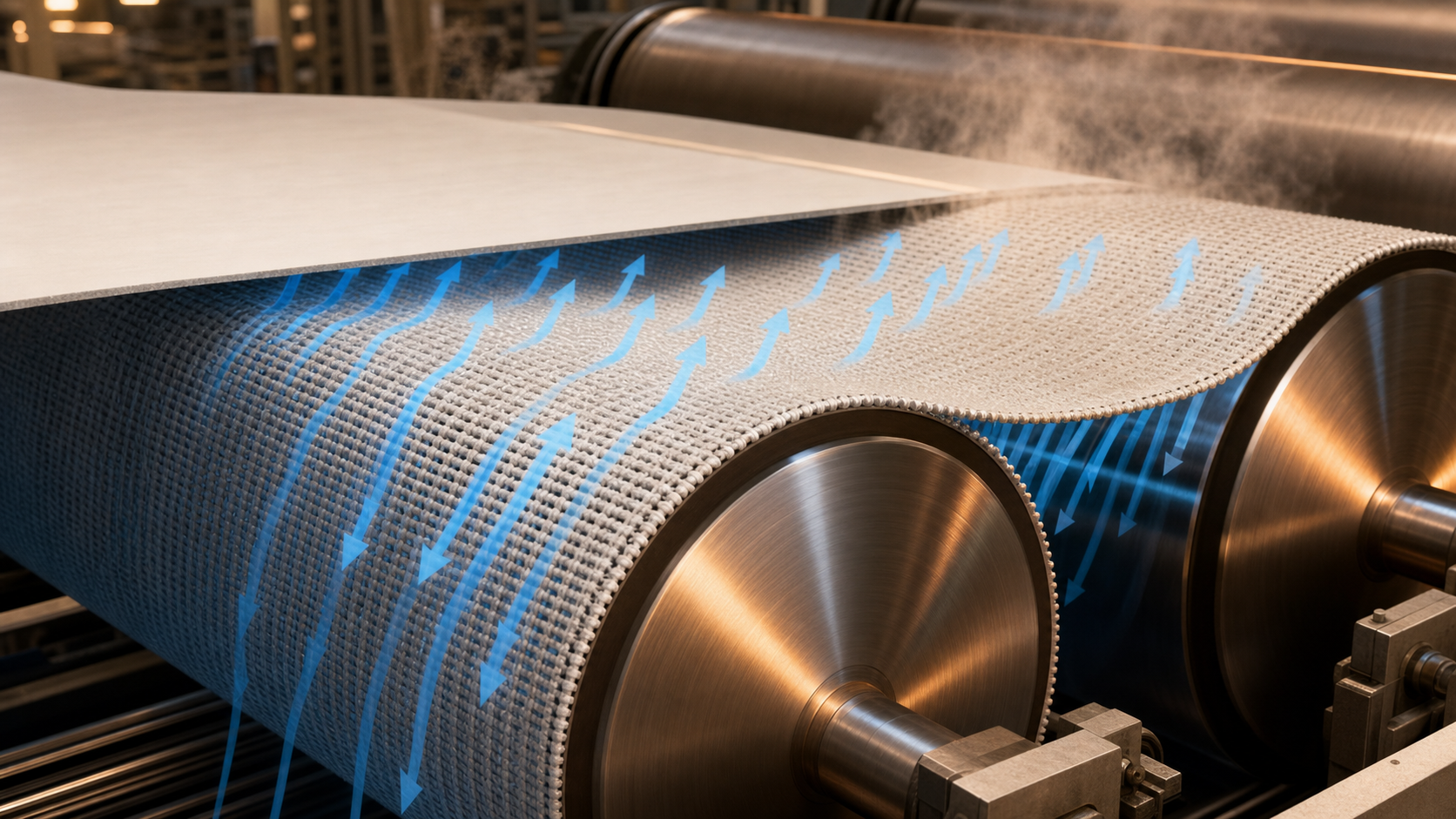
Dryer fabric air permeability is one of the key parameters behind drying efficiency. It affects how water vapor leaves the sheet, how pocket air moves, and how stable the sheet remains through the dryer section.
Why Permeability Matters
In the dryer section, heat removes water from the sheet, but vapor must also escape. The dryer fabric supports the sheet while allowing air and vapor movement around the cylinders and pockets.
If permeability is too low, vapor removal can be restricted. If it is too high, sheet support and runnability may suffer.
Permeability Effects by Machine Condition
| Machine Condition | Permeability Consideration |
| --- | --- |
| High-speed packaging grade | Balance support, wear resistance, and pocket ventilation |
| Tissue or lightweight grade | Prioritize sheet stability and gentle support |
| Heavy board grade | Review drying load and fabric strength together |
| Poor moisture profile | Check fabric cleanliness, pocket ventilation, and hood balance |
| Rising steam use | Compare fabric permeability against original specification |
Low Permeability Warning Signs
Low effective permeability can be caused by the selected fabric design or by plugging during operation. Warning signs include higher sheet moisture, uneven cross-machine moisture profile, slower drying response, and increased steam demand.
Contamination from size, coating, fillers, fibers, and oil can reduce effective airflow even when the original fabric specification was correct.
High Permeability Trade-Offs
High permeability may improve vapor movement, especially in positions where pocket ventilation is limited. However, it can also reduce contact stability and increase the risk of sheet flutter, wrinkles, or marking on sensitive grades.
For some dryer positions, flat yarn dryer fabric can offer a useful balance of contact area, wear resistance, and air movement.
Selection Checklist
- Grade, basis weight, and machine speed
- Dryer group position and pocket ventilation
- Cylinder surface condition and fabric tension
- Required air permeability range
- Seam type, fabric width, and edge finishing
- Cleaning method and expected contaminant load
Practical Takeaway
Air permeability should be selected for the specific dryer position, not as a single number for the whole machine. The right fabric supports drying, runnability, and energy efficiency together.


