Forming fabrics rarely fail without leaving clues. The clues may appear first as a polished machine-side surface, a thin strip near one edge, a change in drainage, or a small increase in drive load. The useful question is not simply, “How many days has this fabric run?” It is, “Is the wear uniform, stable, and consistent with this position?”
Start With a Baseline, Not a Calendar
Service life varies with machine speed, furnish, filler content, vacuum, forming board and foil condition, shower water, and fabric tension. A calendar target taken from another machine can therefore be misleading.
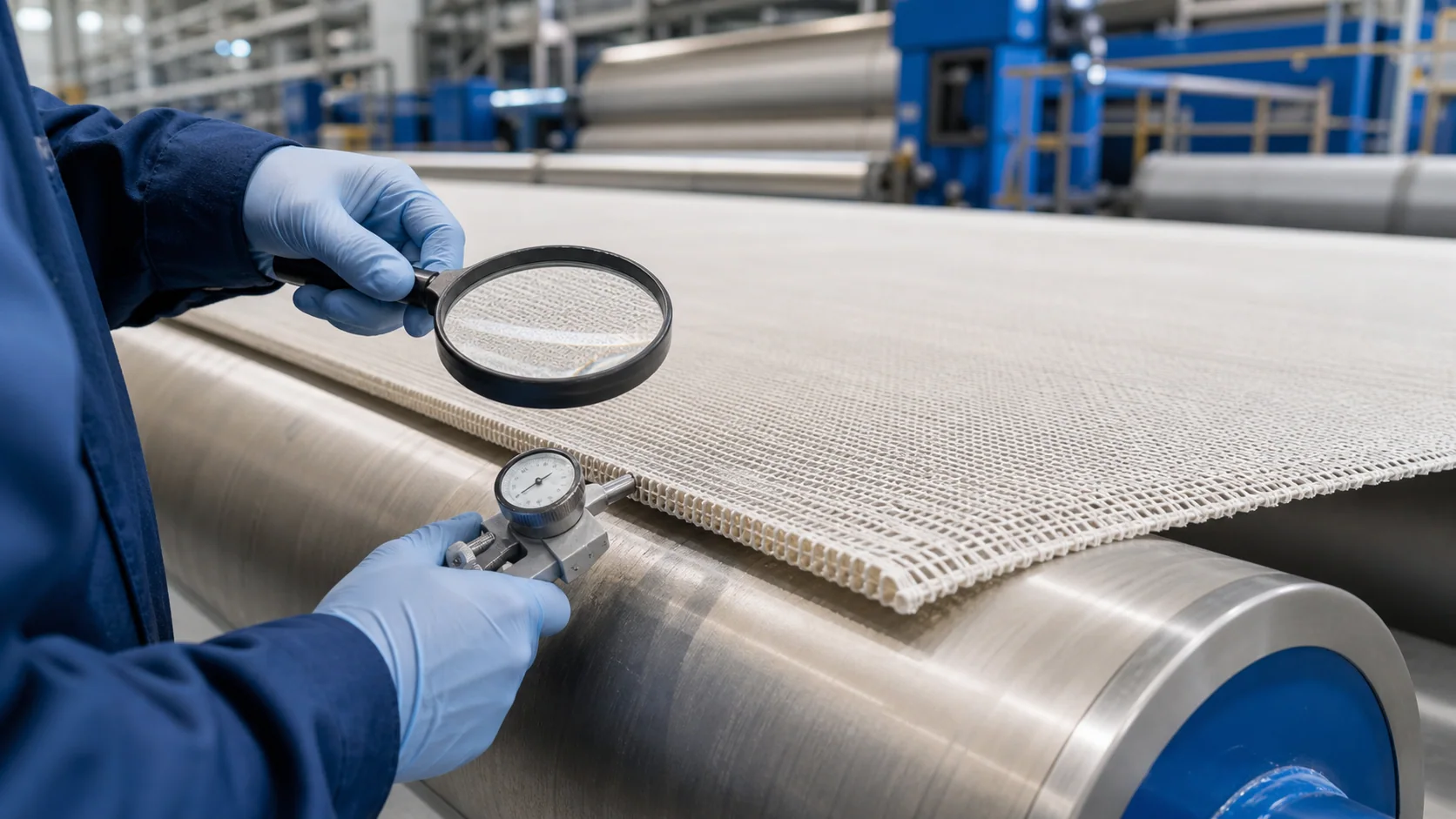
Record the new fabric thickness before start-up, then measure the same cross-machine points during planned stops. Mark the drive side, center, and tending side, plus any positions opposite vacuum box edges or known high-wear elements. The trend matters more than a single reading.
For a new project, keep the original specification for the forming fabric together with the first stable operating data. That gives the mill and supplier a common reference when performance begins to change.
What Common Wear Patterns Usually Suggest
| Observation | Likely area to investigate |
| --- | --- |
| Even polishing across the full width | Normal machine-side abrasion; compare rate with the baseline |
| Narrow wear band in one cross-machine position | Foil edge, vacuum box cover, debris, or local alignment issue |
| Heavier wear on one side | Guiding, roll alignment, tension profile, or edge contact |
| Cracked or damaged edge | Repeated edge contact, poor guiding response, or damaged edge equipment |
| Rapid wear after a shutdown | Incorrect threading, a displaced stationary element, or trapped debris |
| Paper-side damage with little machine-side wear | Handling damage, shower impact, chemical attack, or contamination |
These are starting points, not automatic diagnoses. A polished area can be the result of normal contact, while a small local groove can indicate a machine problem that will damage the next fabric as well.
Check the Machine Before Blaming the Fabric
Inspect stationary elements for sharp edges, steps, loose fasteners, uneven wear, and deposits. Confirm that rolls turn freely and that shower nozzles are not directing a concentrated jet at one strip. Review tension and guiding trends rather than relying only on the current display.
Vacuum deserves special attention. Increasing vacuum may improve short-term drainage but can also increase fabric-to-element contact and wear. If drainage has declined, first separate fabric plugging from furnish changes, vacuum leakage, and worn dewatering elements.
Connect Wear With Paper and Machine Data
A replacement decision should combine physical inspection with operating evidence:
- Thickness trend at fixed cross-machine points
- Drive load and fabric tension trend
- Drainage and vacuum behavior by position
- Sheet formation, wire mark, and moisture profile
- Guiding corrections and edge condition
- Cleaning frequency and contaminant load
For grades that need high sheet support, an SSB triple-layer forming fabric can retain useful paper-side characteristics even while the machine side experiences abrasion. That does not make it wear-proof; it makes consistent measurement more important.
Adjust, Monitor, or Replace?
Continue monitoring when wear is uniform and key performance indicators remain stable. Correct the machine and shorten the inspection interval when wear is localized or accelerating. Plan replacement when structural damage, seam or edge risk, unstable guiding, unacceptable sheet marking, or loss of drainage can no longer be controlled safely.
Avoid setting one universal percentage as the replacement limit. Fabric construction and machine position matter. The supplier should interpret thickness loss alongside photographs, operating data, and the original design.
What to Send With a Wear Report
Good photographs include a scale, machine direction, and cross-machine position. Photograph both surfaces, both edges, and any seam or repair area. Add the fabric running hours, grade mix, speed, tension, vacuum settings, shower pressure, cleaning chemicals, and recent furnish changes.
If paper defects are already present, use the inspection sequence in Troubleshooting Sheet Marks Caused by PMC Wear or Contamination to compare the defect repeat pattern with the fabric and machine layout.
Practical Takeaway
The best replacement timing is based on a trend, not a guess. Consistent measurements show whether the fabric is wearing normally; the wear pattern shows where to look; and paper-machine data shows whether the remaining service life is still productive.


